
Engaging Patients through Social Media
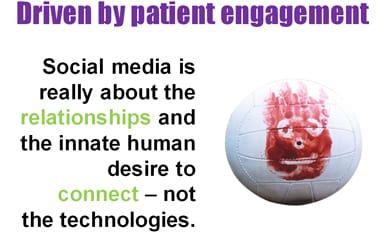 Later this week, I will moderate an interactive panel for Kansas City Healthcare Communicators Society.The topic: How to Deploy Social Media to Improve Patient Engagement. With expert input spanning a wide range of social networking tools and best practices from our healthcare marketing panelists, the session promises to provide an eye-opening look at what it takes to continuously engage patients online.
Here are highlights from colleagues in the healthcare social media field:
Two-fifths of adult internet users in the U.S. have read someone else’s online commentary about health. Many thanks to the Pew Internet & American Life Project, who published a report earlier this year revealing that 80% of internet users search online for health information, and a growing number rely on the internet to connect peer-to-peer. Among the findings:
- Symptoms and treatments dominate health searches (66% and 56% respectively).
- 44% of internet users look online for information about doctors or other health professionals.
- 25% of adult web users look online for people with a chronic illness.
- 24% have consulted online rankings of doctors and hospitals.
- 20% look online for people with similar health issues.
There are 140 uses for your 140 characters if your healthcare organization tweets. Phil Baumann, a social media strategist and advisory board member for Mayo Clinic Center for Social Media, studied the challenges and opportunities available for providers via Twitter. In the end, he identified 140 different healthcare uses for Twitter – an oldie but goodie for those in need of ideas when it comes to tweeting for and about health.
More than 1,200 U.S. hospitals are now actively using social media sites. And that number is climbing every day. If so many healthcare providers are putting it out there on so many sites, it must be simple, right? Wrong. We all know representing an organization via social media is much more complex than managing personal accounts, so it’s important to know what you’re doing behind the scenes. Fortunately, help is out there, like this list of 20 Excellent Social Media Networking Resources for Health Professionals, compiled recently by HealthWorks Collective.
I’m looking forward to a thought-provoking discussion by our panelists this week. We will update you with the biggest takeaways and lessons learned next week.